

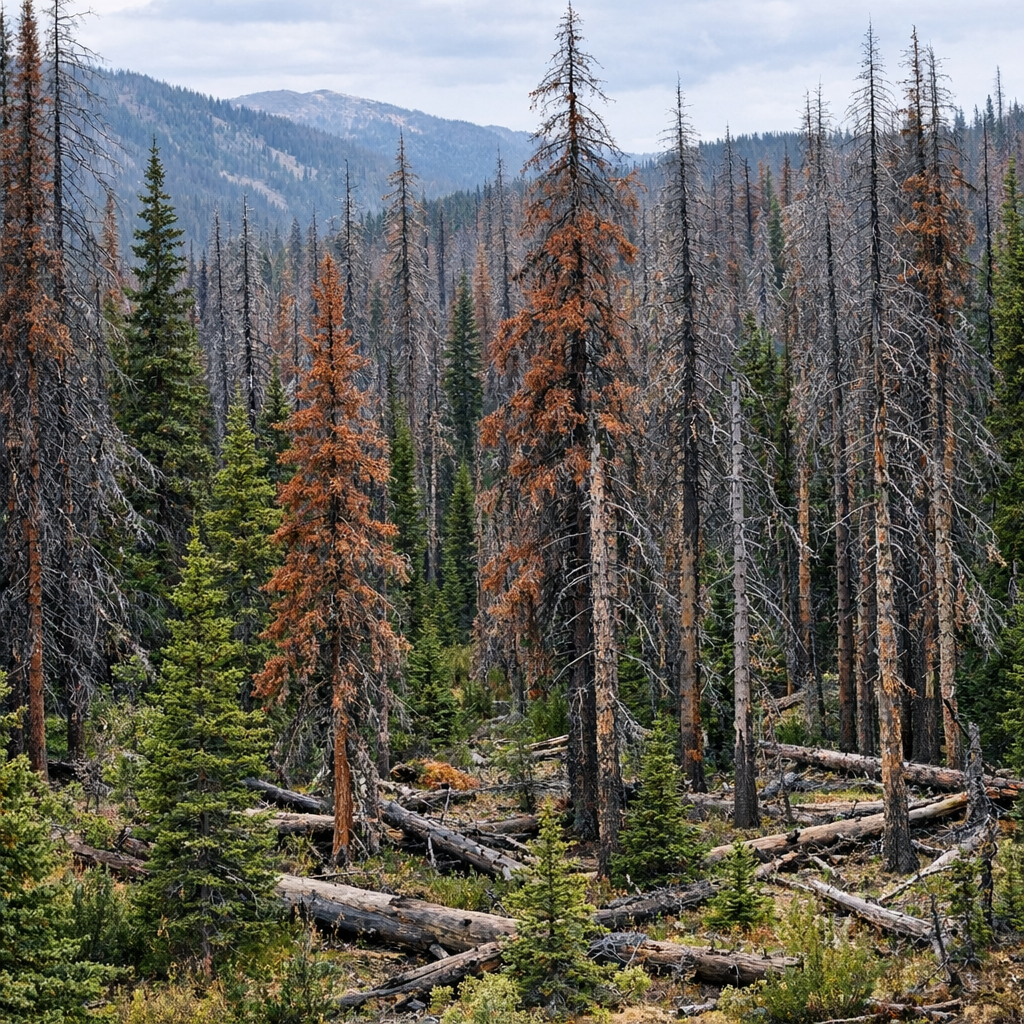
The mountain pine beetle (MPB) has long been a formidable threat to Colorado’s forests, and recent developments indicate that Conifer is not immune to its impacts. Historically, from the late 1990s through 2013, MPB infestations affected approximately 3.4 million acres of forests in Colorado, leading to significant tree mortality. While the initial outbreaks were concentrated in areas like Summit, Grand, Eagle, and Routt counties, the Front Range, including Conifer, has seen increased signs of beetle activity since around 2021.
As of November 2025, Jefferson County reported over 575 unique sites affected by the MPB. This escalation is particularly concerning for Conifer residents, given the direct correlation between forest health and wildfire risk. Dead and dying trees serve as fuel, potentially intensifying fire behavior and making suppression efforts more challenging. The Colorado State Forest Service notes that post-outbreak conditions can lead to increased surface fuel loading, which may contribute to heightened fire behavior.
Addressing this issue requires a multifaceted approach. Homeowners are encouraged to engage in proactive forest management practices, such as removing infested trees and creating defensible spaces around properties. Collaboration with local authorities and participation in community initiatives can also play a pivotal role in mitigating the spread of the MPB and reducing associated wildfire risks.
Staying informed and taking collective action are essential steps in preserving the health and safety of Conifer’s cherished forests and the community at large.