

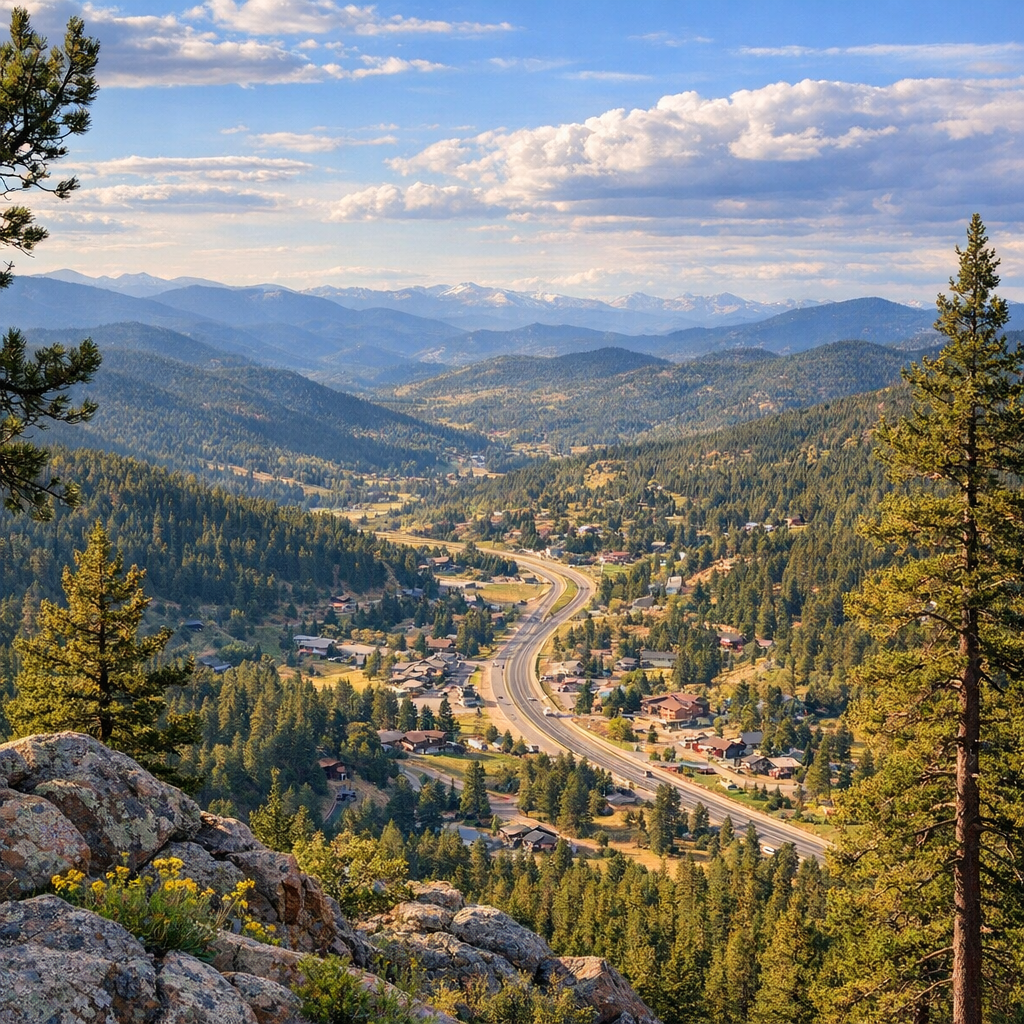
Conifer, Colorado, situated in the foothills of the Rocky Mountains, experiences a humid continental climate characterized by cool temperatures and significant precipitation throughout the year. The average annual temperature is approximately 38.6°F (3.7°C), with annual precipitation around 28.2 inches (717 mm).
Seasonal Weather Patterns
Summers in Conifer are warm with cool nights, while winters are cold, often approaching zero degrees Fahrenheit. The area receives an average of 95 inches of snow annually, contributing to its picturesque winter landscapes.
Environmental Concerns
Conifer faces several environmental challenges, notably related to water quality and availability. The community relies on groundwater from a fractured crystalline bedrock aquifer, making sustainable water management crucial. Total dissolved solids (TDS) levels have been rising, with sources including natural minerals and human activities such as wastewater discharge and road de-icing. The federal secondary standard for TDS in drinking water is 500 mg/L, while Colorado has set a groundwater standard of 400 mg/L. Both the Conifer and Aspen Park Metro Districts have systems that discharge treated wastewater to groundwater, and TDS levels have been steadily increasing.
Additionally, the presence of per- and polyfluoroalkyl substances (PFAS), known as “forever chemicals,” in the water supply is a growing concern. These synthetic chemicals are found in various products and do not readily break down in the environment, posing potential health risks.
Community Initiatives
Local organizations are actively addressing these environmental issues. The Conifer Area Council, for instance, is involved in monitoring water quality and advocating for sustainable development practices to mitigate the impact on the community’s natural resources.
Understanding Conifer’s unique climate and environmental challenges is essential for residents and stakeholders to make informed decisions that promote the health and sustainability of the community.